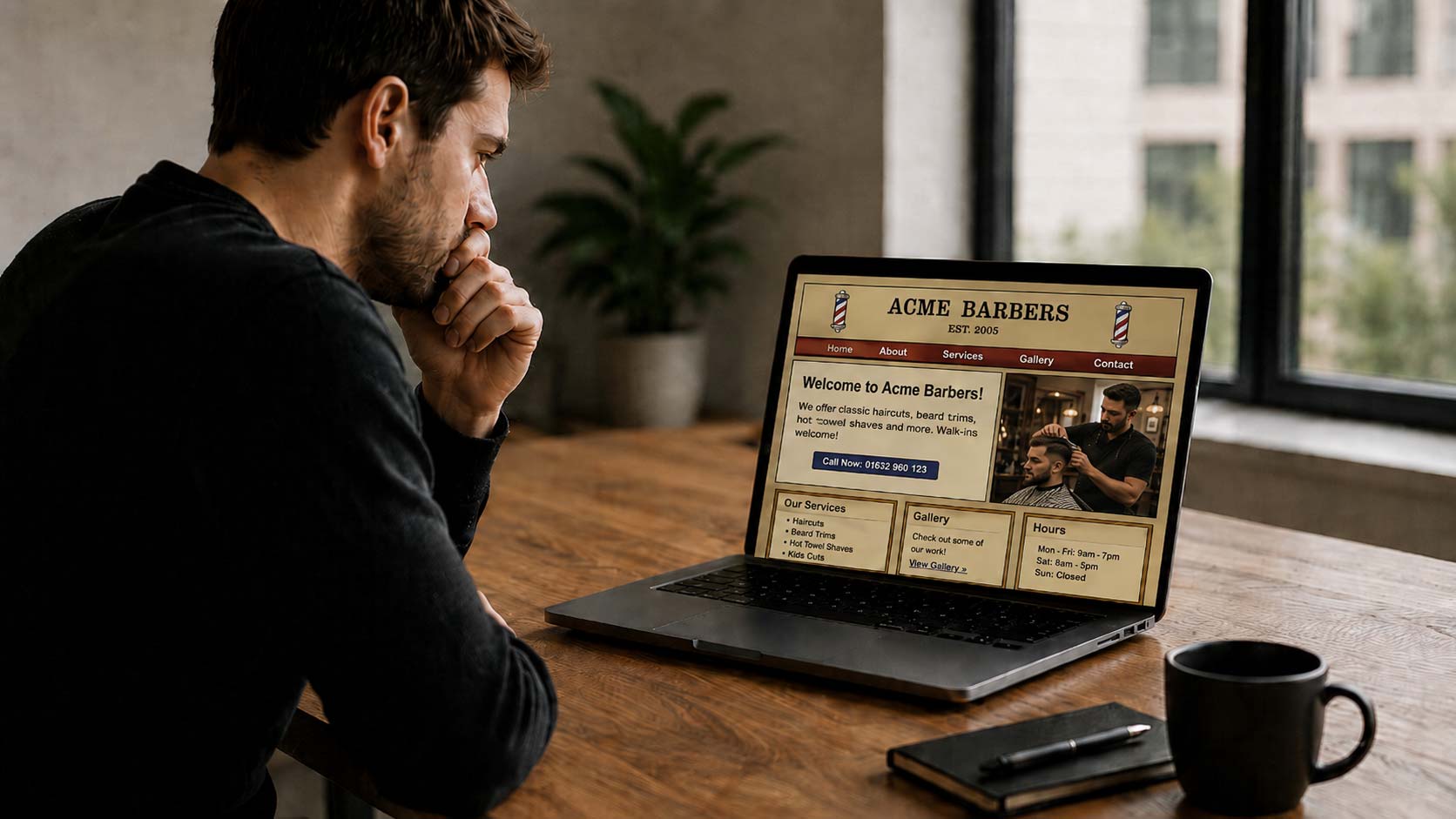
A website should be one of the most powerful tools in your business. It works 24 hours a day, showcases your services, builds trust, and helps turn visitors into customers.
Yet thousands of small business websites fail to generate leads, sales, or enquiries every year.
The surprising part? Most business owners assume that simply having a website is enough. Unfortunately, that couldn't be further from the truth.
In this article, we'll explore the most common reasons small business websites fail and what you can do to ensure your website becomes a valuable asset rather than an expensive digital brochure.
1. They Focus on Looks Instead of Results
Many business owners spend weeks choosing colours, fonts, and images while giving little thought to what they actually want visitors to do.
A beautiful website means very little if it doesn't generate enquiries, phone calls, bookings, or sales.
Successful websites are built around clear goals. Every page should guide visitors towards taking a specific action, whether that's requesting a quote, booking a consultation, or making a purchase.
Before worrying about aesthetics, ask yourself:
What action do I want visitors to take?
How will I measure success?
Is my website helping visitors move towards that action?
Design matters, but strategy matters more.
2. Slow Loading Speeds Drive Visitors Away
Modern consumers are impatient.
Research consistently shows that users expect websites to load within a few seconds. If a page takes too long to load, visitors often leave before they even see your content.
Slow websites can be caused by:
Large image files
Poor hosting
Excessive plugins
Unoptimised code
Outdated website platforms
Not only does this frustrate users, but it can also negatively affect your search engine rankings.
Every second counts. A faster website creates a better user experience and often leads to higher conversion rates.
3. They Ignore Mobile Users
More than half of all web traffic now comes from mobile devices.
Despite this, many small business websites are still designed primarily for desktop screens.
Common mobile issues include:
Text that's difficult to read
Buttons that are too small
Images that don't scale properly
Slow mobile performance
Forms that are difficult to complete
If potential customers struggle to use your website on their phone, they will likely move on to a competitor.
A mobile-friendly website is no longer optional. It's essential.
4. Weak Calls to Action
One of the biggest mistakes small businesses make is assuming visitors know what to do next.
Imagine walking into a shop and finding no signs, no staff, and no indication of where to go. That's exactly how many websites feel.
Your website should clearly guide users with strong calls to action such as:
Get a Free Quote
Book a Consultation
Contact Us Today
Request a Callback
Start Your Project
These prompts should appear naturally throughout your website, making it easy for visitors to take the next step.
5. Poor Search Engine Optimisation (SEO)
Many websites are launched without any SEO strategy.
As a result, they remain invisible to potential customers searching online.
A website might look fantastic, but if nobody can find it, it won't generate business.
Common SEO mistakes include:
Missing page titles and descriptions
Poor keyword targeting
Duplicate content
Slow website speed
Lack of local SEO optimisation
For example, a plumber in Manchester doesn't just want to rank for "plumber." They want to appear when people search for "emergency plumber in Manchester."
Good SEO helps connect your business with customers actively looking for your services.
6. They Don't Build Trust
When visitors land on your website, they're asking themselves one question:
"Can I trust this business?"
Unfortunately, many websites fail to answer that question.
Trust-building elements include:
Customer testimonials
Reviews
Case studies
Professional photography
Clear contact information
Security certificates (SSL)
Industry accreditations
Without trust signals, visitors may hesitate to get in touch, even if they're interested in your services.
People buy from businesses they trust. Your website should reinforce that trust at every opportunity.
7. Confusing Navigation
Visitors should never have to think too hard about how to use your website.
Complicated menus and cluttered layouts create frustration and increase bounce rates.
Good navigation is simple and intuitive.
Visitors should be able to quickly find:
Your services
About page
Pricing information
Contact details
Frequently asked questions
If users can't find what they're looking for within a few clicks, they may leave altogether.
8. Outdated Content
An outdated website sends the wrong message.
Imagine visiting a business website and seeing a blog post from three years ago, old promotions, or services that are no longer available.
It immediately raises questions about whether the business is still active.
Regularly updating your website demonstrates professionalism and credibility.
Fresh content can include:
Blog posts
Case studies
Customer success stories
Portfolio updates
Industry insights
An active website shows customers that your business is active too.
9. They Don't Track Performance
Many small business owners have no idea how their website is performing.
Without data, it's impossible to know:
How many visitors you're getting
Where visitors come from
Which pages perform best
Why visitors leave
Which marketing efforts are working
Tools such as website analytics provide valuable insights that help improve performance over time.
Successful websites are continuously refined based on real user behaviour.
10. DIY Solutions Often Create Long-Term Problems
Website builders have made it easier than ever to create a website.
While that's great for getting started, many DIY websites eventually run into limitations.
Common issues include:
Generic templates
Poor performance
Limited customisation
SEO restrictions
Weak user experience
A website is often the first impression potential customers have of your business.
Investing in a professionally designed website can improve credibility, increase conversions, and support long-term growth.
Final Thoughts
A website should be more than an online business card.
It should actively generate leads, build trust, and support your business goals.
Most small business websites fail because they focus on appearance rather than performance. They neglect mobile users, ignore SEO, lack clear calls to action, and fail to provide a seamless user experience.
The good news is that these problems are entirely avoidable.
Whether you're launching a new website or improving an existing one, focusing on user experience, speed, trust, and conversion optimisation can make a dramatic difference to your results.
Remember, the best website isn't necessarily the most impressive looking one. It's the one that consistently helps your business grow.